
Walk into a room and you feel something before you even notice why. A cozy bedroom wraps you in comfort. A bright kitchen makes you feel alert and clean. A colorful child’s room sparks energy and imagination. Behind every one of those feelings is light, and more specifically, the color of that light. Choosing the right LED light color for each room in your home is one of the most powerful, and most overlooked, ways to shape how every space feels and functions.
At Relxday, we live and breathe light. In this guide, we break down the basics of color temperature, the difference between warm, cool, and colored light, and the best LED color for every room in your home.
Color Temperature Basics: Understanding the Kelvin Scale
LED light color is measured in Kelvin, a scale that describes the appearance of the light. Despite what intuition might suggest, lower Kelvin numbers produce warmer, more yellow and orange light, while higher numbers produce cooler, more blue and white light. This is because the scale is based on the color a black body radiator glows at different temperatures.
Here is a quick reference for the main ranges you will encounter.
- 2000K to 2700K: Very warm white. Candle-like, amber glow. Cozy and intimate.
- 2700K to 3000K: Warm white. Soft yellow similar to incandescent bulbs. Comfortable and relaxing.
- 3000K to 4000K: Neutral white. Balanced, clean, neither warm nor cool. Good for general use.
- 4000K to 5000K: Cool white. Crisp and bright, slightly blue. Energizing and focused.
- 5000K to 6500K: Daylight. Very bright, blue-white. Mimics midday sunlight. Stimulating.
Beyond these white light ranges, LEDs also come in saturated colors like red, blue, green, and purple. These colored LEDs serve different purposes, from decoration to mood creation to children’s play spaces.
Warm Light vs. Cool Light vs. Colored Light
Understanding the three main categories of light will help you make confident choices for every room.
Warm light (2000K to 3000K)
Warm light mimics the glow of fire, candles, and sunset. It creates intimacy and relaxation. Because it contains very little blue spectrum, it does not suppress melatonin, making it ideal for evening use and sleep preparation. Warm light is the foundation of cozy spaces like bedrooms, dining rooms, and living rooms.
Cool light (3500K to 6500K)
Cool light mimics daylight and promotes alertness and focus. The higher blue content signals the brain to stay awake, which is great for workspaces but problematic in the evening. Cool light belongs in kitchens, offices, garages, and bathrooms where clarity and visibility matter most.
Colored light
Colored LEDs add personality and mood. Red and amber tones create warmth and romance. Blue and green create calm or playfulness. Purple and pink add whimsy and creativity. Colored light is best used as an accent rather than the primary illumination, adding layers of personality to a room without replacing functional lighting.
Room-by-Room LED Color Recommendations
Bedroom: warm and dim
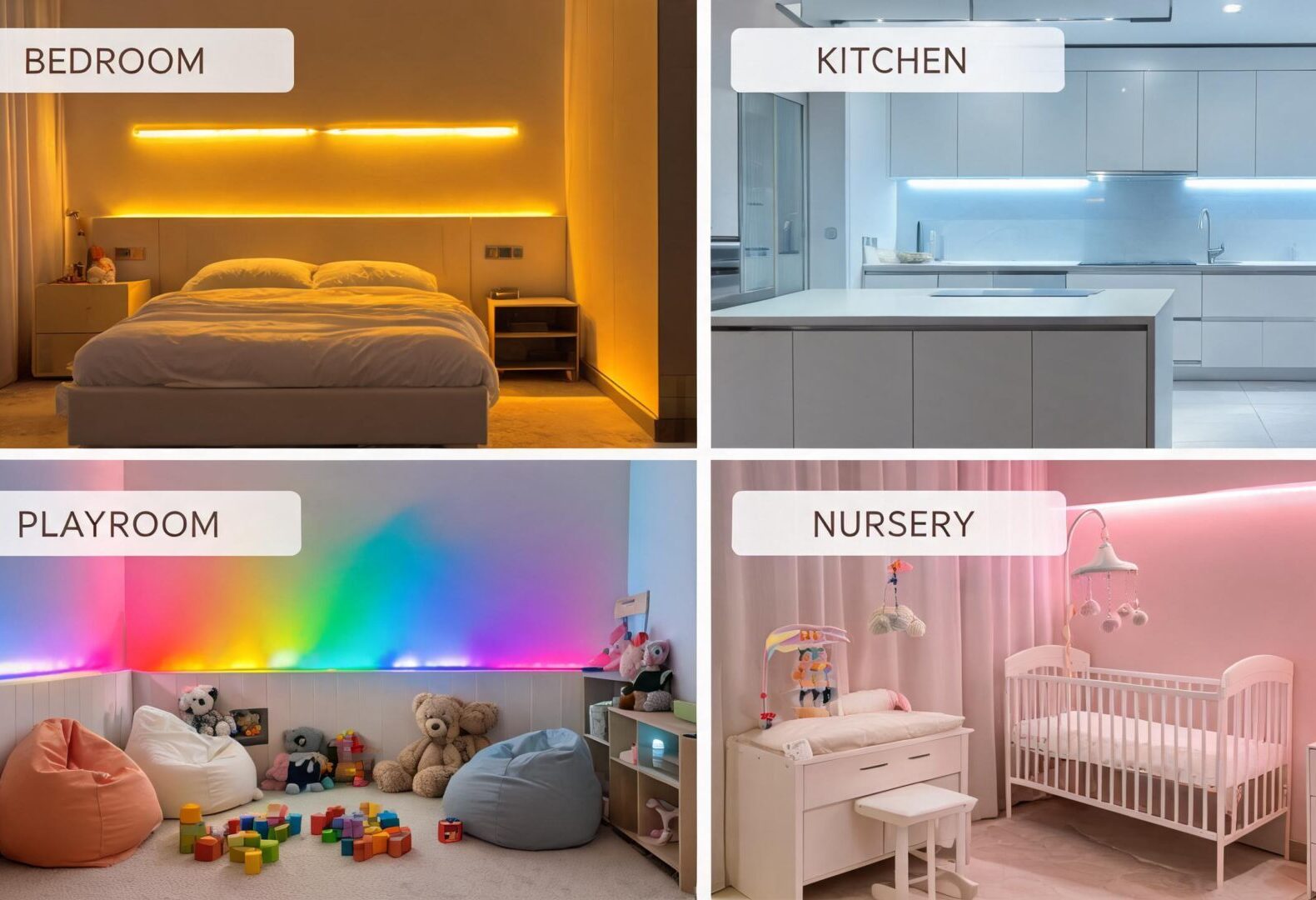
The bedroom is your sanctuary, and its lighting should support rest. Use warm white light in the 2000K to 2700K range for lamps and night lights. Avoid cool overhead lights in the evening, as they can interfere with sleep. A dimmable bedside lamp lets you lower the light as bedtime approaches. A warm LED night light serves as a gentle sleep cue for both adults and children.
Kitchen: bright and cool
The kitchen is a workspace, and you need to see clearly to cook safely. Cool white light in the 4000K to 5000K range provides the clarity and contrast needed for food preparation. Under-cabinet lighting in this range is especially useful because it illuminates countertops without casting shadows. If your kitchen doubles as a dining space, install a separate warm light over the table that you can switch to during meals.
Living room: layered and warm
The living room serves multiple purposes, so it needs layered lighting. Use warm white, around 2700K to 3000K, for ambient and accent lighting. Add a brighter, neutral task light for reading. Consider colored LED accents for entertainment, like a backlight behind the TV or a glow strip along a shelf. The ability to switch between layers lets you adapt the room from movie night to reading to conversation.
Kids room: playful and warm
Children’s rooms benefit from a combination of functional and playful lighting. Use warm white for the main light and bedtime, to support healthy sleep. Add colored LED accents for fun and creativity during playtime. A themed night light with a soft warm glow helps with bedtime routines and any fear of the dark. Avoid bright cool lights in the evening, as children are even more sensitive to blue light’s sleep-disrupting effects.
Home office: cool and focused
Your home office needs light that supports concentration. Use cool white or daylight, around 4000K to 5000K, for the main light during working hours. Position your desk lamp to the side to avoid screen glare. If you work in the evening, switch to a warmer light for the last hour to begin winding down. A warm LED desk accessory, like a personalized sign, can serve as ambient lighting while adding personality to the space.
The Psychological Effects of Each Color
Color psychology is not mysticism. Decades of research show that different wavelengths of light affect mood, alertness, and even appetite. Here is what each main color does to the mind.
- Warm white and amber: Promotes relaxation, comfort, and intimacy. Lowers alertness, which is ideal for winding down.
- Cool white and blue: Increases alertness, focus, and energy. Can suppress melatonin, so it should be avoided in the evening.
- Red: The least disruptive to melatonin. Creates warmth, passion, and a sense of safety. Excellent for night lights.
- Green: Associated with nature, calm, and balance. Soothing in low intensities.
- Purple: Linked to creativity and luxury. Adds depth and whimsy as an accent.
- Pink: Evokes playfulness and romance. Popular in kids’ rooms and bedrooms.
When choosing colors, think about what you want to feel in each room. The light should support the room’s purpose, not fight against it.
Our Recommended Product for Colorful, Functional Lighting
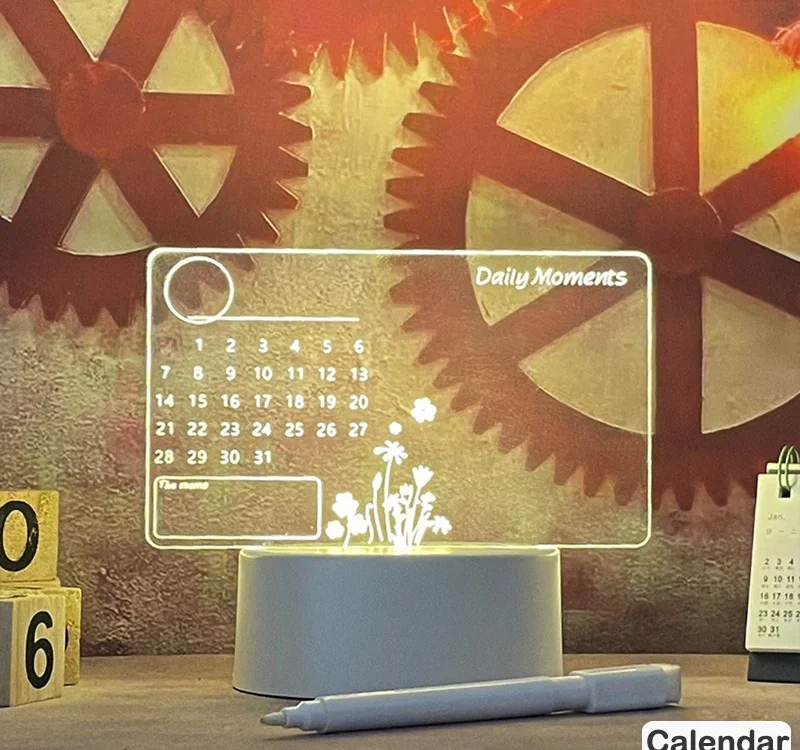
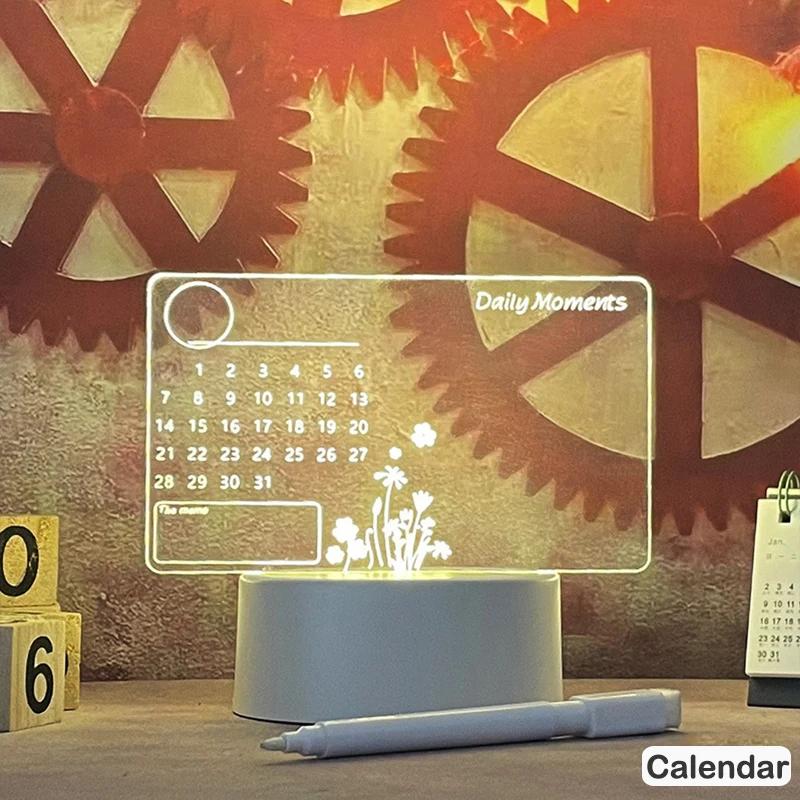
If you want a single product that combines warm ambient light with a creative, colorful surface, we recommend the RX02 LED Message Board from Relxday. It is a versatile piece that fits into nearly every room in the house.
Product: RX02 LED Message Board 3D Night Light
Price: $16.92 to $50.92
Why it works: This message board functions as both a writable surface for notes and reminders and a warm LED light source. The illuminated acrylic panel adds a soft glow to any room, while the writable surface lets you change messages, doodles, or decorations whenever you like. It works as a kid’s night light, a home office note board, or a playful accent in a living room. The warm LED base fits bedrooms and kids’ rooms, while the colorful writing adds personality wherever you place it.
Explore more lighting and decor options at the Relxday shop.
View the RX02 LED Message Board
Practical Tips for Choosing LED Colors
Match the color to the activity, not just the room
A bedroom used for reading needs a different light than a bedroom used for sleeping. Think about what happens in the space and when. Layer your lighting so you can switch between activity modes. A warm lamp for reading, a dim night light for sleeping, and a brighter neutral light for tidying up give you flexibility.
Be consistent within a room
Mixing vastly different color temperatures in the same room can feel jarring. If your overhead light is cool white and your lamp is warm amber, the contrast can be uncomfortable. Try to keep the main light sources within a similar range, and use colored or accent lights as additions rather than replacements.
Consider dimmability
Dimmable LEDs give you the most flexibility. A light that can shift from bright cool white for working to dim warm amber for relaxing is the most versatile option for multi-purpose rooms. Look for bulbs and fixtures with built-in dimming or color-changing capabilities.
Test before you commit
Colors look different on a screen than they do on a wall. If possible, buy a single bulb or fixture first and test it in the room at different times of day. The same warm white can look cozy in the evening and dingy in the morning depending on the room’s paint and natural light. Testing saves you from buying a full set of the wrong color.
Think about transitions between rooms
If you can see from the kitchen into the living room, a stark temperature jump can feel abrupt. Consider a gradual transition, using neutral white in transitional spaces like hallways to bridge the gap between a cool kitchen and a warm living room. This creates a more cohesive feeling throughout the home.
Common Mistakes to Avoid
- Using cool white in the bedroom. This is the most common mistake and the most disruptive to sleep.
- Choosing one color temperature for the entire home. Different rooms have different needs.
- Ignoring natural light. Your LED choices should complement the daylight a room receives, not fight it.
- Over-lighting with bright LEDs. More is not always better. Dim, layered light often feels more comfortable than a single bright source.
- Forgetting about evening use. A kitchen that works great with cool light at noon needs a warm option for late-night snacks.
Frequently Asked Questions
What Kelvin temperature is best for a bedroom?
For a bedroom, aim for 2000K to 2700K. This warm range mimics firelight and sunset, which supports natural melatonin production and helps your brain prepare for sleep. Avoid anything above 3000K in the bedroom, especially in the hour before bed. If you read in bed, use a warm lamp rather than a cool overhead light.
Is cool white bad for your eyes?
Cool white light is not harmful to your eyes in the sense of causing damage. However, it can cause eye strain if it is too bright or if it creates glare on screens. The bigger concern with cool light is its effect on sleep. Blue-spectrum light suppresses melatonin, so exposure in the evening can make it harder to fall asleep. Use cool light during the day and switch to warm light in the evening.
Can LED light color affect my mood?
Yes. Research consistently shows that light color and intensity influence mood, alertness, and even cognitive performance. Warm light promotes relaxation and comfort, while cool light increases alertness and focus. Colored LEDs can evoke specific emotional responses, with red creating warmth and passion, green evoking calm, and blue increasing alertness. Choosing colors thoughtfully can help you create the emotional atmosphere you want in each room.
What color light is best for a kids room?
For the main and bedtime light, use warm white in the 2000K to 2700K range to support healthy sleep habits. For play and decoration, colored LEDs add fun and personality without disrupting sleep if they are turned off before bedtime. A warm night light is especially important for children, as their developing sleep cycles are more sensitive to blue light than adults’. Avoid bright cool lights in children’s bedrooms in the evening.
Should all the lights in my home match?
No. Different rooms serve different purposes and should have different lighting. However, you should aim for consistency within each room and smooth transitions between adjacent spaces. Using neutral white in hallways and transitional spaces can help bridge the gap between a warm living room and a cool kitchen. The goal is a home that feels cohesive, not identical.
Are colored LED lights just for decoration?
While colored LEDs are often used decoratively, they also serve functional and psychological purposes. Red and amber light can support sleep because they do not suppress melatonin. Green light can create a calming atmosphere for relaxation. Blue light can increase alertness for focused work. Colored LEDs are most effective when used intentionally as accents that support a room’s purpose rather than as random decoration.
How do I know if a bulb is warm or cool before buying?
Check the packaging or product description for the Kelvin rating, usually written as a number followed by K, such as 2700K or 4000K. Most packaging also includes a descriptive label like “warm white,” “soft white,” “daylight,” or “cool white.” When shopping online, look for this information in the specifications. If it is not listed, assume nothing and ask the seller, since the color is one of the most important factors in your choice.
Light color is the invisible hand that shapes how every room in your home feels. By understanding the Kelvin scale and matching each room’s light to its purpose, you can transform your home from simply lit to intentionally designed. Start with the room that matters most to you, choose your colors with care, and let each space glow with intention. Light up your memories, one room at a time, with Relxday.