
Every parent knows the struggle. The sun goes down, and suddenly your little one has endless energy, requests for one more glass of water, and a dozen reasons why sleep is simply not an option. If bedtime feels like a battle in your home, you are not alone. The secret to peaceful evenings often comes down to one thing: a consistent bedtime routine. And the right night light can be the anchor that holds that routine together.
At Relxday, we believe that light is more than illumination. It is a signal, a comfort, and a memory in the making. In this guide, we walk you through building the perfect bedtime routine for kids using night lights, with practical tips for every age and common mistakes to avoid along the way.
Why a Bedtime Routine Matters More Than You Think
Children thrive on predictability. When a child knows what comes next, their nervous system begins to relax. Research shows that a consistent bedtime routine improves sleep quality, reduces night waking, and even supports cognitive development. The routine does not need to be complicated. What matters is repetition.
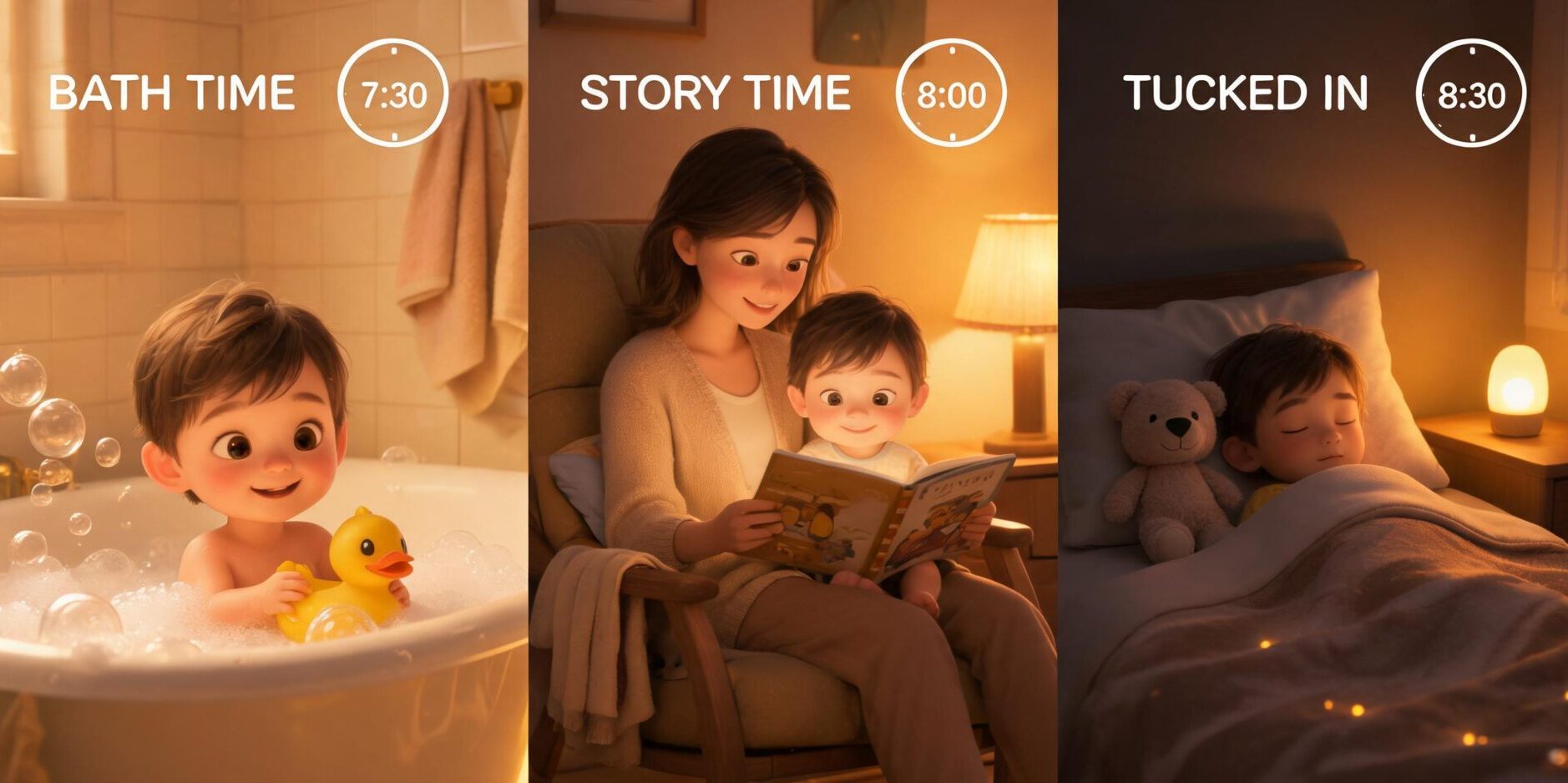
Think of the routine as a bridge between the excitement of the day and the stillness of sleep. Each step signals to your child’s brain that it is time to wind down. Bath, pajamas, story, lights dimmed. The final cue, the one that says “now it is really time to sleep,” is often the night light clicking on.
How Night Lights Work as Sleep Cues
A sleep cue is any signal that tells the brain it is time to sleep. For babies, it might be a lullaby. For toddlers, it might be a specific blanket. For older kids, it can be the soft glow of a familiar night light. The brain learns to associate that light with rest, and over time, the mere act of turning it on begins the relaxation process automatically.
The key is choosing a light that is warm, dim, and comforting. Cool blue or bright white lights can actually suppress melatonin production, the hormone responsible for sleepiness. Warm tones in the amber to soft orange range mimic a sunset, which is exactly the cue your child’s brain evolved to respond to.
Components of a Good Bedtime Routine
A solid bedtime routine has three parts: the wind-down, the connection, and the sleep cue. Let us break each one down.
1. The Wind-Down (20 to 30 minutes)
This is when you begin dimming the lights and reducing stimulation. Turn off screens, since blue light from tablets and TVs interferes with melatonin. Lower the overhead lights or switch to lamps. A warm bath can help, since the drop in body temperature after a bath naturally induces sleepiness. This is also a good time for light stretching or a calm conversation about the best part of the day.
2. The Connection (10 to 15 minutes)
Children need to feel safe and connected before they can let go and sleep. Reading a story together, singing a favorite song, or simply lying beside them for a few minutes fills their emotional cup. This is when the night light should come on. The warm glow becomes part of the connection ritual, a visual hug that says “you are safe here.”
3. The Sleep Cue (the final moment)
This is the last thing before sleep. It might be a kiss on the forehead, a specific phrase like “goodnight, sleep tight,” and the gentle click of the night light settling into its glow. Keep this part short and identical every night. The repetition is what makes it powerful.
Age-Specific Tips for Using Night Lights
Babies (0 to 12 months)
For infants, a very dim warm light is enough. You want to be able to see during night feedings and diaper changes without fully waking the baby. Avoid placing the light directly in the line of sight from the crib. A soft glow reflected off a wall works best. Keep the light on a timer if possible, so it turns off after you leave the room.
Toddlers (1 to 3 years)
Toddlers are developing imagination, which means new fears can emerge. Monsters in the closet, shadows on the wall. A night light gives them a sense of control over the darkness. Let your toddler help turn it on each night. This small act of agency can reduce bedtime resistance. A 3D LED night light with a familiar shape, like a favorite animal or character, can become a beloved bedtime companion.
Preschoolers (3 to 5 years)
At this age, children love rituals. Let the night light be part of a “goodnight tour” where you say goodnight to toys, books, and the light itself. Preschoolers also begin to understand time, so a light on a timer can help them learn when it is okay to get up in the morning. If the light is on, it is still sleep time.
School-Age Kids (6 to 12 years)
Older children may want more say in their bedroom environment. Let them choose a night light that reflects their personality. A custom 3D LED night light with their name or a design they love makes the routine feel like theirs, not something imposed by parents. This is also the age when reading before bed becomes a habit, and a soft reading light that transitions to a night light is ideal.
Our Recommended Night Light for the Perfect Routine
If you are looking for a night light that can grow with your child and become the centerpiece of your bedtime routine, we recommend the RX17 Custom 3D LED Night Light from Relxday. Here is why it stands out.
Product: RX17 Custom 3D LED Night Light
Price: $15.00 to $29.41
Why parents love it: This night light combines a warm, gentle glow with a personalized 3D acrylic design that can feature your child’s name, a favorite shape, or a custom engraving. The soft LED base creates a comforting ambiance without being too bright, making it perfect as a sleep cue. Kids adore seeing their name illuminated, which turns the light from a simple tool into a treasured part of their bedroom.
You can explore the full collection of personalized night lights and other thoughtful gifts at the Relxday shop.
View the RX17 Custom 3D LED Night Light
Common Mistakes Parents Make with Bedtime Lights
Mistake 1: Using a light that is too bright
More light is not better. A night light should be just bright enough to see shapes in the room, not bright enough to read by. If you can see colors vividly, the light is probably too strong. Look for warm, dim options, and consider a light with adjustable brightness.
Mistake 2: Choosing cool or blue tones
Blue and cool white light mimics daylight, which is the opposite of what you want at bedtime. Stick with warm amber, soft orange, or very warm white tones. These colors support natural melatonin production and create a cocoon-like feeling in the room.
Mistake 3: Inconsistent use
If the night light is on one night, off the next, and left on all night the third, your child’s brain never learns the association. Consistency is everything. Turn the light on at the same point in the routine every single night, even on weekends and vacations.
Mistake 4: Using the night light as a punishment or reward
The night light should always be a comfort, never something taken away for bad behavior. If you associate it with consequences, it loses its calming power. Keep it neutral and loving, always present when it is time to sleep.
Mistake 5: Forgetting to dim the rest of the house
If the hallway is blazing bright and the rest of the family is watching TV with the volume up, the night light in the bedroom has to work overtime. Dim the whole house as bedtime approaches. The environment around the bedroom matters just as much as the bedroom itself.
Creating Consistency When Life Gets Chaotic
Routines break down during travel, illness, holidays, and growth spurts. That is normal. The goal is not perfection but return. When the routine slips, simply start again the next night. Here are a few tips for maintaining consistency during disruptions.
- Travel with a portable version of your child’s night light or a familiar small lamp.
- Keep the sequence the same even if the timing shifts. Bath, book, light, sleep, in that order.
- During illness, allow extra comfort but keep the light cue intact.
- When moving to a new home or a new bedroom, set up the night light first, before anything else.
- Involve your child in the routine so they can eventually do parts of it independently.
The beauty of a light-based cue is that it travels well. A small LED night light can turn any hotel room or grandparent’s guest room into a familiar sleep space. This is one reason personalized night lights are so powerful. They carry a piece of home wherever your child goes.
The Science of Warm Light and Sleep
To understand why warm light works, it helps to know a little about how the brain processes light. Special cells in our eyes, called intrinsically photosensitive retinal ganglion cells, are sensitive to blue light. When they detect blue wavelengths, they signal the brain to stay alert and suppress melatonin. This system evolved because daylight is rich in blue light.
Warm light, on the other hand, contains very little blue spectrum. It does not trigger the alerting response, allowing melatonin to rise naturally. This is why a warm night light supports sleep while a cool one works against it. When you choose a night light for your child, you are not just decorating a room. You are working with their biology.
Building Your Own Routine Step by Step
Ready to build your family’s routine? Here is a simple framework you can adapt.
- Choose a consistent bedtime and work backward 30 to 45 minutes.
- Begin with a wind-down activity, such as a warm bath or quiet play.
- Dim the lights throughout the house.
- Move to the bedroom for a book, song, or conversation.
- Turn on the night light as the final sleep cue.
- Say your goodnight phrase and leave while your child is drowsy but awake.
Adjust the activities to fit your family, but keep the sequence and the light cue consistent. Within two to three weeks, most children begin to settle more easily because their brains have learned the pattern.
Frequently Asked Questions
Should I leave the night light on all night?
For babies under six months, a very dim light can stay on for night feedings. For older children, it is generally best to use the light as a cue and then turn it off or set it to its dimmest setting once your child is asleep. Total darkness promotes the deepest, most restorative sleep. If your child is afraid of the dark, a very dim warm light left on all night is acceptable, but keep it as low as possible.
What color night light is best for sleep?
Warm colors are best. Amber, soft orange, and warm white (around 2000K to 2700K on the color temperature scale) are ideal because they contain very little blue light and do not interfere with melatonin production. Avoid blue, green, and cool white lights in the bedroom, especially close to bedtime.
At what age should a child start using a night light?
Many parents introduce a dim night light from birth for practical reasons, such as night feedings. However, children typically do not develop a fear of the dark until around age two or three. A night light becomes most meaningful as a sleep cue from the toddler years onward, when children can participate in turning it on and associating it with bedtime.
Can a night light become a sleep crutch?
Any sleep association can become a crutch if your child cannot sleep without it. However, a night light is generally a healthy sleep cue because it does not require a parent’s presence. To avoid dependency issues, make sure your child can eventually turn the light on and off independently, and keep it as one part of a broader routine rather than the only cue.
How do I transition my child from sleeping with a light to sleeping in the dark?
If you want to move toward darker sleep, do it gradually. Use a light with adjustable brightness and lower it a small amount each week. You can also switch to a light on a timer that turns off 30 minutes after your child falls asleep. Explain the change in age-appropriate terms so your child feels involved rather than surprised.
Are LED night lights safe to leave on in a child’s room?
Yes, quality LED night lights are safe to use in children’s rooms. They produce very little heat compared to incandescent bulbs, which reduces burn risk. Look for lights with low voltage bases and stable designs that cannot be easily knocked over. Always choose products from reputable brands that meet safety standards, and keep cords out of reach of young children.
How long does it take for a bedtime routine to start working?
Most families see improvement within two to three weeks of consistent use. The brain needs repetition to form strong associations, so the first few nights may not show dramatic change. Stick with the same sequence and the same light cue every night, and you will likely notice your child settling more easily and sleeping more soundly as the routine becomes familiar.
Building the perfect bedtime routine is not about following a rigid script. It is about creating a sequence of comforting, repeatable cues that tell your child it is safe to let go and sleep. With a warm night light as your anchor and a little patience, peaceful evenings are within reach. Light up your memories, one bedtime at a time, with Relxday.