
If you have ever struggled to get your child to fall asleep at a reasonable hour, you might be surprised to learn that the color of the light in their bedroom could be working against you. As parents, we tend to focus on bedtime routines, screen time limits, and consistent schedules — all of which matter — but the type of light your child is exposed to in the hours before sleep plays a profound role in how quickly and how deeply they drift off. At Relxday, we have spent years designing lighting products that work in harmony with the body’s natural rhythms, and we want to share what the science says about warm light, blue light, and the quest for a good night’s sleep.
The Melatonin Story: Your Body’s Sleep Signal
To understand why light color matters so much, we need to talk about melatonin. Often called the “sleep hormone,” melatonin is a naturally occurring compound produced by the pineal gland, a small structure deep in the brain. Melatonin does not knock you out like a sleeping pill. Instead, it acts as a chemical messenger that tells your body the day is winding down and it is time to prepare for rest. When melatonin levels rise in the evening, your body temperature drops slightly, your breathing slows, and you begin to feel that characteristic drowsiness that signals sleep is near.
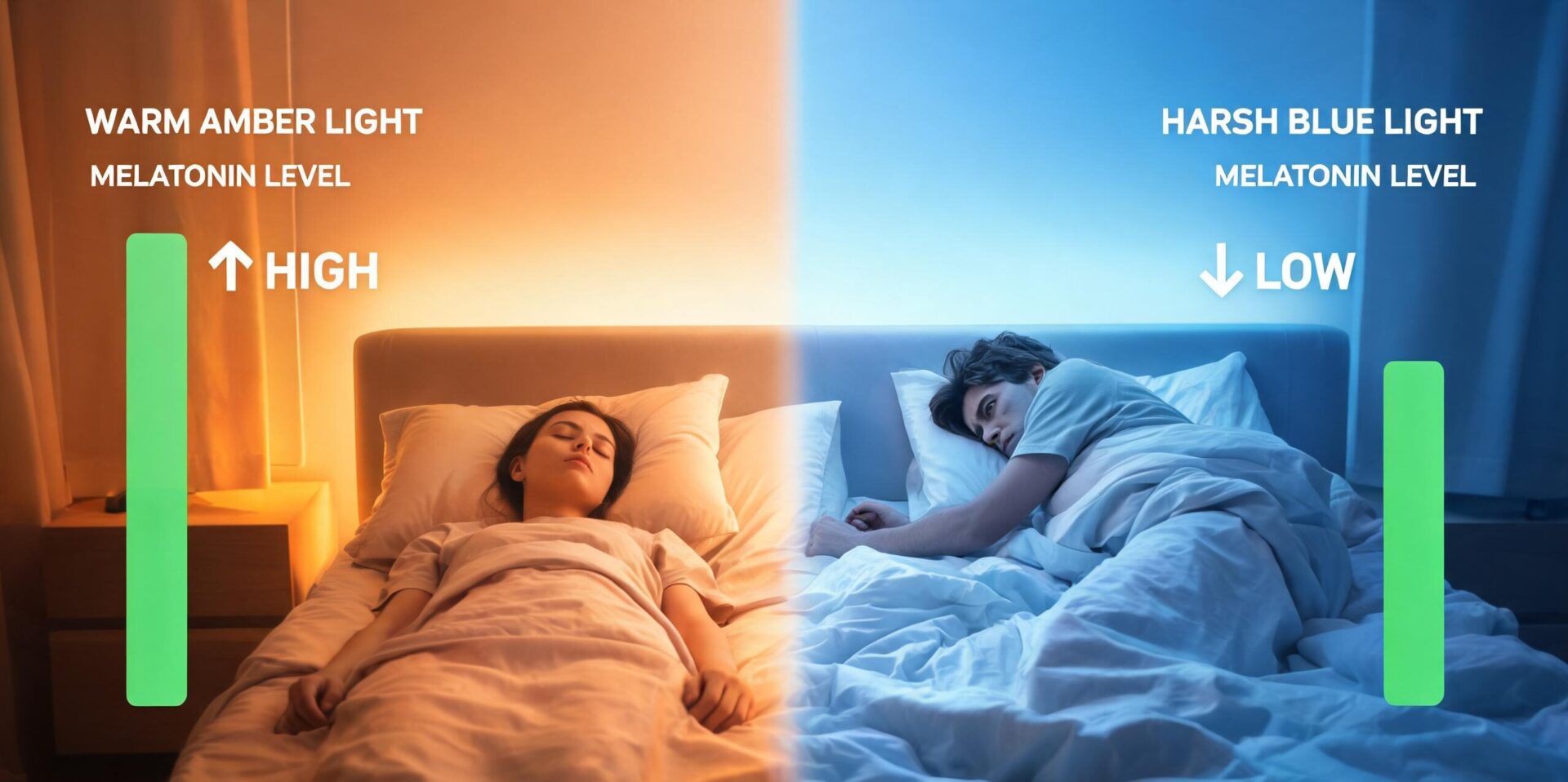
Here is where light enters the picture. Melatonin production is directly controlled by light exposure through a pathway in the eye that connects to the brain’s master clock, known as the suprachiasmatic nucleus. When this clock detects bright light — especially light in the blue end of the spectrum — it signals the pineal gland to suppress melatonin production. This is why exposure to bright light in the evening can make it genuinely difficult to fall asleep, no matter how tired you feel. The light is literally telling your body that it is still daytime.
This mechanism evolved over millions of years when the only light source after sunset was fire — candlelight, campfires, and oil lamps, all of which emit warm, reddish-orange tones. The human body is biologically wired to interpret warm light as “evening” and cool, blue light as “midday.” In the modern world, we have inverted this natural pattern. We sit under cool fluorescent office lights all day and then stare at blue-light-emitting screens and bright LED bulbs well into the night. For adults, this disrupts sleep. For children, whose sleep cycles are more sensitive and whose developing brains need quality rest for growth and learning, the impact can be even more significant.
Blue Light vs. Warm Light: What the Research Shows
Numerous studies have demonstrated the differential effects of blue and warm light on sleep. One landmark study published in the journal Physiological Reports found that exposure to blue-enriched light in the evening delayed melatonin onset by an average of 90 minutes compared to warm light exposure. In children, whose melatonin suppression response is even stronger than adults, the effect can be more pronounced. A study from the University of Colorado found that just one hour of bright light exposure before bedtime suppressed melatonin production in children by nearly twice the amount seen in adults under the same conditions.
Warm light, by contrast, has minimal impact on melatonin suppression. Light in the 2700K to 3000K range — the warm amber and soft yellow tones that mimic firelight — allows melatonin to rise naturally in the evening, supporting the body’s transition into sleep. This is why sleep specialists increasingly recommend warm-toned lighting for the two to three hours before bedtime, and why the lighting industry has seen a surge in “warm white” LED products designed specifically for evening use.
It is worth noting that not all blue light is bad. During the daytime, blue light exposure is actually beneficial — it boosts alertness, improves mood, and helps regulate the body’s circadian rhythm. The problem arises when blue light exposure continues into the evening and nighttime hours, confusing the body’s internal clock and suppressing the very hormone that initiates sleep. The goal is not to eliminate blue light entirely but to manage exposure timing: plenty of natural daylight during the day, and warm, gentle light in the evening.
Recommended Color Temperatures for Bedrooms
Color temperature is measured in Kelvin (K), and understanding this scale can help you make informed choices about your bedroom lighting. Lower Kelvin values indicate warmer, more amber light, while higher values indicate cooler, more blue-tinted light. Here is a practical guide to color temperatures and their ideal uses:
- 2700K – 3000K (Warm White): The ideal range for bedrooms and nighttime use. This warm, golden glow mimics firelight and does not suppress melatonin. It creates a cozy, relaxing atmosphere that signals to the body that it is time to wind down.
- 3500K – 4000K (Neutral White): Suitable for kitchens, bathrooms, and workspaces where you need clear visibility but do not want the harshness of cool light. Avoid using this range in bedrooms during evening hours.
- 5000K – 6500K (Cool Daylight): Mimics natural midday sunlight. Excellent for task lighting, reading nooks during the day, and spaces where maximum alertness is needed. Should be avoided entirely in the two to three hours before bedtime.
For a child’s bedroom, we recommend keeping all evening lighting in the 2700K to 3000K range. This includes the main room light, any reading lamps, and especially the night light. A warm LED night light in this color range will provide enough visibility to feel safe without interfering with melatonin production. You can find warm-toned LED options in the Relxday shop, where every product is designed with sleep-friendly color temperatures in mind.
Our Recommended Product: RX02 LED Message Board
For parents who want a night light that offers both warm, sleep-friendly illumination and a creative interactive element, the RX02 LED Message Board from Relxday is a versatile and engaging choice.
- Price: $16.92 – $50.92
- Lighting: Warm LED base with multiple color options, all in sleep-friendly color ranges
- Features: Write and erase messages, draw pictures, or leave encouraging notes for your child to discover at bedtime
- Safety: Cool-to-the-touch LED technology, durable acrylic construction, USB or battery powered
- Best for: Adding a personal, interactive touch to bedtime routines while maintaining a sleep-friendly light environment
The RX02 LED Message Board stands out because it combines the warm, melatonin-friendly glow that children need for quality sleep with an element of creativity and connection. Parents can write a goodnight message, draw a small picture, or leave a word of encouragement each evening — turning the simple act of turning on the night light into a meaningful bedtime ritual. The LED base provides a steady, warm glow that is bright enough for comfort but soft enough to support natural sleep cycles. You can explore the RX02 LED Message Board here to see how it can fit into your family’s bedtime routine.
Practical Tips for Parents: Building a Sleep-Friendly Light Environment
Understanding the science is just the first step. Putting it into practice requires some adjustments to your home’s lighting setup and your family’s evening habits. Here are practical, actionable tips for creating a sleep-friendly light environment for your child.
Start dimming two hours before bed. Begin transitioning to warmer, dimmer lighting about two hours before your child’s target bedtime. Turn off overhead lights and switch to lamps with warm bulbs. This gradual shift helps the body begin its natural melatonin production on schedule. The RX02 LED Message Board is perfect for this transition — its warm glow provides enough light for the bedtime routine without disrupting the melatonin cascade.
Manage screen time strategically. Tablets, phones, and televisions are significant sources of blue light. Ideally, screens should be put away at least one hour before bedtime. If this is not always practical, use blue-light filtering apps or glasses, and keep screen brightness as low as possible. Remember that even with filters, the content itself — exciting videos, games, or social media — can stimulate the brain and delay sleep onset.
Choose the right night light. Not all night lights are created equal. Look for LED options that specifically use warm color temperatures (2700K to 3000K). Avoid night lights that emit cool white or blue-tinted light, no matter how stylish they look. The goal is gentle, amber-toned illumination that provides comfort without melatonin suppression. Position the light low to the ground and away from direct line of sight with your child’s pillow, so it illuminates the room softly without shining into their eyes.
Get morning light exposure. The flip side of managing evening light is ensuring adequate light exposure during the day. Morning sunlight helps calibrate the body’s circadian rhythm, making it easier to fall asleep at night. Encourage outdoor play in the morning, open blinds first thing, and consider bright, cool-toned lighting for morning routines. This daytime exposure makes the evening transition to warm light more effective.
Frequently Asked Questions
What exactly is melatonin and why does light affect it?
Melatonin is a hormone produced by the pineal gland that helps regulate the body’s sleep-wake cycle. It is sometimes called the “darkness hormone” because its production increases in the evening as light decreases. Special light-sensitive cells in the eye communicate with the brain’s master clock, and when they detect light — especially blue-spectrum light — they signal the pineal gland to reduce melatonin production. This is why exposure to bright or blue-toned light in the evening can delay sleep onset.
Is blue light really that harmful, or is it exaggerated?
The concern about blue light is backed by substantial scientific research, though it is sometimes oversimplified in popular media. Blue light is not inherently harmful — daytime blue light exposure is beneficial for alertness and mood. The issue is timing. Evening and nighttime exposure to blue light suppresses melatonin production and can delay sleep onset by 30 to 90 minutes. For children, whose melatonin systems are more sensitive, the effect is more pronounced. The key is managing when blue light exposure occurs, not eliminating it entirely.
What color temperature should my child’s night light be?
For a child’s night light, we recommend a color temperature of 2700K to 3000K, which produces a warm amber or soft yellow glow. This range mimics the natural warm tones of firelight and does not significantly suppress melatonin production. Avoid night lights with cool white or blue-tinted light (4000K and above), as these can interfere with the body’s natural sleep signals. All Relxday LED products are designed to operate within sleep-friendly color ranges.
Can using a warm night light really improve my child’s sleep?
Yes. While a night light alone will not solve all sleep issues, replacing bright or blue-toned evening light with warm, dim illumination can meaningfully improve sleep onset time and quality. Research shows that warm light environments in the hours before bed support natural melatonin production, leading to faster sleep onset and more restful sleep. When combined with a consistent bedtime routine and limited screen time, warm lighting is a powerful tool in the sleep hygiene toolkit.
Are LED night lights safe to leave on all night for my child?
LED night lights are extremely safe for overnight use. LEDs generate minimal heat, remaining cool to the touch even after hours of continuous operation. They consume very little electricity and have a long lifespan. The acrylic materials used in Relxday products are non-toxic, durable, and shatter-resistant, making them suitable for children’s rooms. There is no fire risk or burn hazard associated with leaving a quality LED night light on throughout the night.
How far in advance should I start dimming lights before bedtime?
Sleep experts generally recommend beginning the transition to warmer, dimmer lighting about two hours before the target bedtime. This gives the body sufficient time to ramp up melatonin production naturally. You do not need to sit in near-darkness for two hours — simply switch from bright overhead lights to warm lamps and night lights, and avoid screen exposure during this window. The gradual shift from bright to warm light mimics the natural transition from day to evening and helps the body prepare for restful sleep.
Conclusion
The science is clear: the color and intensity of the light your child is exposed to in the evening has a real, measurable impact on their sleep. Blue and cool-toned light suppresses melatonin and delays sleep onset, while warm amber light in the 2700K to 3000K range supports the body’s natural sleep rhythms. By making simple changes — dimming lights two hours before bed, managing screen time, and choosing warm-toned LED night lights — you can create a bedroom environment that works with your child’s biology rather than against it.
At Relxday, we are committed to lighting that does more than illuminate — it supports wellbeing, creates comfort, and helps families build healthy sleep habits. Our LED products are designed with warm, sleep-friendly color temperatures and thoughtful features that make bedtime something to look forward to. Explore the full collection at our shop and discover how the right light can transform your family’s nights. Because when we say Light Up Your Memories, we mean creating the kind of warm, comforting moments that lead to peaceful, restorative sleep — night after night.